Technical vs Fundamental Analysis
Technical vs Fundamental Analysis in Forex. Which One Works Better
Technical Analysis
Technical analysis in forex focuses on price movements and market behavior rather than economic factors. The core idea behind technical trading is that all known information is already reflected in price. By studying historical price data, traders aim to identify patterns that repeat over time.
Technical traders use charts, indicators, and price structures to analyze trends, momentum, and support and resistance levels. Common tools include moving averages, RSI, MACD, Fibonacci retracements, and candlestick patterns. These tools help traders decide when to enter or exit a trade based on probability rather than prediction.
In the forex market, technical analysis is especially popular because currency prices are highly liquid and move in recognizable patterns. Many short term and intraday traders rely almost entirely on technical signals to guide their trading decisions.
Advantages of Technical Analysis
One major advantage of technical analysis is its clarity. Charts provide visual confirmation of market direction, making it easier to spot trends and reversals. Technical trading also offers precise entry and exit points, which is essential for managing risk and reward. Another strength is its flexibility. Technical analysis can be applied across all timeframes, from scalping to long term trading. It works well in trending markets as well as ranging conditions when support and resistance levels are respected.
Limitations of Technical Analysis
Despite its strengths, technical analysis has limitations. Indicators are based on past data, which means they can lag during fast market movements. False signals can occur, especially during high volatility or unexpected news events. Technical analysis also struggles to explain why the market is moving. It shows what is happening but not the underlying cause. This can be problematic during major economic announcements when price behavior changes rapidly.

Fundamental Analysis
Fundamental analysis in forex focuses on economic, political, and financial factors that influence currency values. Instead of charts, fundamental traders analyze interest rates, inflation, employment data, GDP growth, and central bank policies.
Currencies represent the economic strength of a country. When economic data improves, the currency tends to appreciate. When conditions weaken, the currency often declines. Fundamental analysis aims to identify these long term trends before they fully develop in the market.
Central banks play a crucial role in fundamental forex analysis. Decisions by institutions such as the Federal Reserve, European Central Bank, and Bank of England can significantly impact forex prices through interest rate changes and policy guidance.
Advantages of Fundamental Analysis
Fundamental analysis provides deep insight into long term price direction. It helps traders understand why currencies rise or fall. By following macroeconomic trends, traders can align themselves with broader market forces rather than short term price fluctuations. Fundamental analysis is also valuable during major news events. Traders who understand economic expectations can anticipate volatility and position themselves accordingly.
Limitations of Fundamental Analysis
One of the main challenges of fundamental analysis is timing. Economic trends develop slowly, making it difficult to pinpoint exact entry points. Traders may identify the correct direction but still experience drawdowns due to short term price noise. Another limitation is complexity. Interpreting economic data requires experience and understanding of how different indicators interact. Markets can also react unpredictably to news. Fundamental analysis alone may not provide clear risk management levels, which is why many traders combine it with technical tools.
Why Most Professional Traders Combine Both
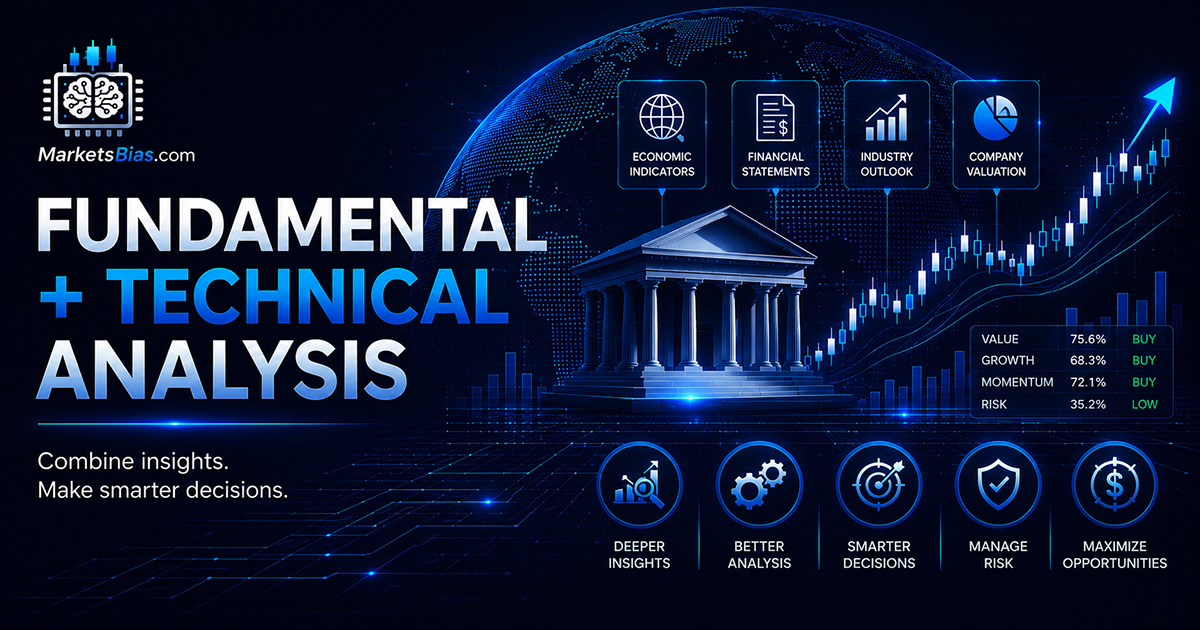
Many experienced forex traders combine technical and fundamental analysis to create a balanced strategy. Fundamentals help determine overall market direction, while technical analysis identifies optimal entry and exit points.
For example, a trader may use fundamental analysis to decide that a currency pair is bullish due to rising interest rates. Technical analysis is then used to wait for a pullback or breakout before entering the trade.
This combined approach improves timing, reduces risk, and increases confidence in trading decisions.
Conclusion
Technical and fundamental analysis in forex trading are not competing methods but complementary tools. Technical analysis excels at timing and execution, while fundamental analysis provides context and direction. The most effective traders understand both and apply them strategically based on market conditions.
Rather than asking which one works better, traders should focus on how to use each method correctly. A well balanced approach allows traders to navigate the forex market with clarity, discipline, and confidence.
Source: ONSAFX. Ethan Walker, Financial writer
How AI Trading Assistants Bridges the Divide
At MarketsBias, we've built our AI Trading Assistant to resolve this conflict by delivering the best of both worlds instantly. Our platform analyse your asset both Fundamentally (News , Economic Calendar data, Market Sentiment) and Technically (Price Action, Multi-TimeFrame Survey, Key Support & Resistance Levels, all Indicators analysis and more). Also seamlessly combines Fundamental Analysis with Technical Analysis into one Full (Hybrid) Analysis.
This integration provides a Comprehensive Market View and Professional Risk Assessment in seconds—what used to take hours of separate study. Instead of struggling with the complexity of interpreting economic data or the lag of technical indicators, you receive a clear, actionable output: Clear Market Bias for Day Trading, Key Fundamental & Technical Drivers, and specific Trading Recommendations. As the article suggests, we help you use fundamentals to determine the overall direction and technicals to refine your entry and exit points, all within a single, streamlined workflow.
Ultimately, MarketsBias transforms analysis from a time-consuming, often conflicting process into a source of clarity and confidence. Whether you are trading Forex, Commodities, Indices, or Cryptocurrency, our AI Assistant empowers you to navigate the markets with the balanced, disciplined approach that professionals use.
Try our AI Assistant at https://marketsbias.com for real-time AI Analysis.