Psychology of Trading
The Psychology of Trading and How Emotions Affect Performance
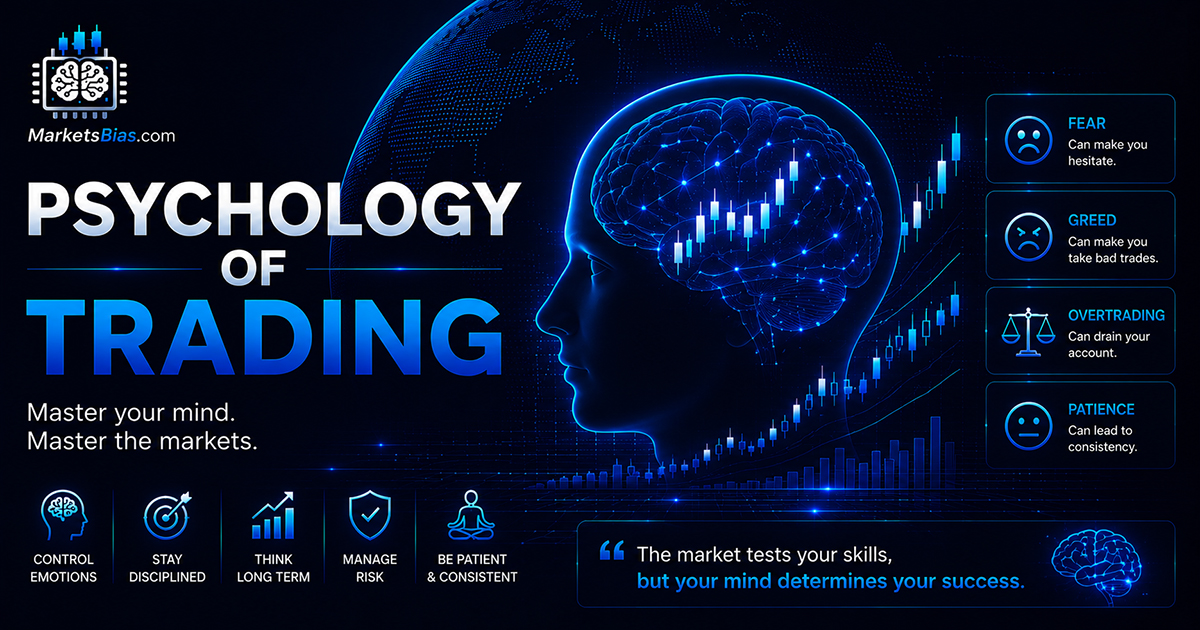
Why Psychology Matters in Forex Trading
Forex trading involves uncertainty. Prices move constantly, and no trade comes with a guaranteed outcome. This uncertainty triggers emotional responses that can interfere with rational thinking. When traders allow emotions to guide decisions instead of logic and planning, performance often suffers.
The forex market is fast paced and highly liquid, meaning trades can move into profit or loss within seconds. This speed amplifies emotional reactions. A sudden price spike can trigger excitement, while an unexpected reversal can cause panic. Without psychological control, traders may abandon their trading plan and act emotionally.
Professional traders understand that mastering psychology is a skill developed over time. They focus on consistency, discipline, and emotional awareness rather than chasing short-term gains.
Common Emotions That Affect Forex Traders
Emotions are natural, but in trading they must be managed carefully. Certain emotions appear repeatedly among forex traders and can directly impact performance.
Fear is one of the most common emotions in forex trading. Traders fear losing money, missing opportunities, or being wrong. This fear often causes traders to close profitable trades too early or hesitate when valid setups appear.
Greed is another powerful emotion. It pushes traders to hold positions longer than planned or increase position sizes beyond safe limits. Greed often appears after a series of winning trades, leading to overconfidence and unnecessary risk.
Overconfidence can be dangerous in forex trading. After a few successful trades, traders may believe they have mastered the market. This mindset often results in ignoring risk management rules and taking trades without proper analysis.
Frustration usually follows losses or a streak of unsuccessful trades. Frustrated traders may attempt to recover losses quickly by overtrading or abandoning their strategy. This behavior often leads to even larger losses.
How Emotions Impact Trading Performance
Emotions influence every stage of the trading process. They affect how traders analyze the market, execute trades, and manage open positions. Emotional trading often leads to inconsistent results, even when the trader uses a proven strategy.
Emotional decision making also impacts risk management. Traders under emotional stress may increase lot sizes, ignore stop losses, or move stop levels irrationally. These behaviors significantly increase risk and reduce long-term profitability.
The Role of Discipline in Trading Psychology
Discipline is the foundation of strong trading psychology. It allows traders to follow their trading plan regardless of emotional pressure. A disciplined trader understands that losses are part of the forex market and focuses on long-term performance rather than individual trades.
Trading discipline involves sticking to predefined entry and exit rules, respecting risk limits, and avoiding impulsive decisions. It also means accepting losses calmly and learning from mistakes rather than reacting emotionally.
Developing discipline takes time and practice. Many traders use journals to track trades and emotional states. This helps identify patterns and improve self-awareness, which is critical for psychological growth.
Risk Management and Emotional Control
Proper risk management reduces emotional stress in forex trading. When traders risk only a small percentage of their capital on each trade, losses become manageable. This reduces fear and prevents emotional reactions. Knowing that no single trade can significantly damage the trading account allows traders to think more clearly. This mindset encourages patience and consistency.
Stop losses, position sizing, and realistic profit targets are essential tools for controlling emotions. When these elements are planned in advance, traders are less likely to make emotional decisions during live market conditions.
Building Emotional Awareness as a Trader
Emotional awareness is the ability to recognize emotions without acting on them. In forex trading, this skill helps traders pause and evaluate decisions logically. Instead of reacting immediately, emotionally aware traders observe their feelings and return focus to their trading plan.
Meditation, breathing exercises, and taking breaks can help improve emotional control. Many successful traders step away from the charts after intense sessions to reset mentally. This prevents burnout and emotional fatigue.
The Importance of a Trading Plan
A clear trading plan provides structure and reduces emotional influence. A well-defined plan outlines entry rules, exit strategies, risk limits, and trading goals. When traders follow a plan, they rely less on emotions and more on logic. A long-term mindset focused on gradual growth reduces emotional pressure and improves consistency.
Conclusion
The psychology of forex trading plays a decisive role in long-term success. Emotions such as fear, greed, overconfidence, and frustration can quietly undermine even the best trading strategies. Understanding how emotions affect performance allows traders to take control of their decision making and trade with clarity.
By developing discipline, practicing strong risk management, and building emotional awareness, traders can improve consistency and confidence in the forex market. Success in forex trading is not just about predicting price movements. It is about mastering yourself.
Source: ONSAFX. Ethan Walker, Financial writer
How MarketsBias Removes Emotion from the Equation
The article perfectly captures the trader's greatest challenge: fear, greed, and overconfidence consistently undermine even the best strategies. At MarketsBias, we've built our AI Trading Assistant to be the ultimate tool for mastering trading psychology. By delivering a clear, objective Market Bias and Actionable Trading Insights, we remove the guesswork and emotional pressure that lead to impulsive decisions.
Our platform provides a structured analysis that includes Key Fundamental & Technical Drivers, Risk Management Guidelines, and specific Trading Recommendations for assets across Forex, Commodities, Indices, and Crypto. This keeps you disciplined, helping you follow your plan without succumbing to fear or greed. With MarketsBias, you trade with clarity, not emotion. Turning psychological control from a struggle into your strongest advantage.
Try our AI Assistant at https://marketsbias.com for real-time AI Analysis.